 By Lal Singh
 For many NRIs, one small SMS can become a massive problem.
A banking OTP that never arrives can block:
- Net banking login
- UPI payments
- Mutual fund transactions
- Credit card verification
- Income tax portal access
- Demat account operations
In 2026, this issue has become even more serious because Indian banks and payment systems still heavily depend on mobile authentication. Many NRIs living in the UAE, USA, UK, Canada, Australia, and Europe regularly face delayed or missing OTPs on overseas numbers.
The problem is no longer just an inconvenience. It can completely lock people out of their own money.
Here is why this happens and how NRIs are solving it in 2026.
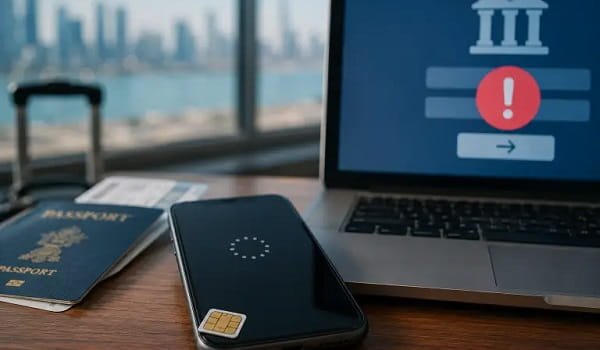
Why NRIs Stop Receiving Banking OTPs
The biggest reason is that many Indian banking systems were originally designed around Indian mobile numbers.
Even today:
- Some banks only properly support Indian SIMs
- Certain systems reject foreign number formats
- International carrier routing delays OTP delivery
- Roaming failures interrupt SMS reception
Recent reports in 2026 highlighted that many NRIs are struggling with OTP failures, SIM deactivation, and banking access issues abroad.
The Biggest Problem: Indian SIM Deactivation
Many NRIs keep an Indian number linked to:
- Bank accounts
- Aadhaar
- PAN
- UPI apps
- Trading platforms
But telecom companies may deactivate Indian SIMs after long inactivity.
Once the SIM stops working:
- OTPs stop completely
- Banking recovery becomes difficult
- Re-KYC may be required everywhere
This is one of the most common financial problems NRIs face today.
Why International Mobile Numbers Often Fail
Some banks technically allow foreign numbers, but real-world issues still exist.
Common Problems
- OTP delays of several minutes
- SMS never arriving
- International SMS filtering
- Country-code compatibility issues
- Roaming interruptions
- Foreign telecom restrictions
Several Indian banking systems still expect a 10-digit Indian mobile number format internally.
The Best Solution in 2026: Keep an Indian SIM Active
Most NRIs now solve the OTP issue by maintaining a permanent Indian SIM card with international roaming enabled.
This remains the most reliable method in 2026.
What NRIs Commonly Do
- Use a prepaid Indian SIM
- Recharge yearly validity plans
- Activate international roaming
- Keep SIM inserted in a secondary phone
This ensures banking OTP continuity worldwide.
According to recent financial reports, many NRIs are now specifically advised to maintain active Indian numbers to avoid banking access disruption.
Which Indian SIMs Work Better Abroad?
Many NRIs prefer:
- Jio
- Bharti Airtel
- Vodafone Idea
because they offer international roaming support.
However, performance varies by country and roaming partner network.
Enable International Roaming Before Leaving India
One major mistake people make is leaving India before enabling roaming.
In many cases:
- Roaming cannot be activated later easily
- OTP delivery fails permanently abroad
- SIM verification becomes complicated
Always activate roaming while still in India.
Use Bank Apps Instead of SMS Where Possible
In 2026, Indian banking security rules are slowly moving beyond pure SMS OTP systems.
The Reserve Bank of India introduced stronger digital authentication rules in 2026 encouraging:
- Device-based authentication
- Biometrics
- App approvals
- Passkeys
- Multi-factor authentication
OTP alone is no longer considered fully secure.
This is actually helping NRIs because many banks now allow authentication through:
- Banking app confirmation
- Device binding
- MPIN verification
- App-based approvals
instead of depending entirely on SMS.
Update Mobile Number Across All Financial Platforms
Many NRIs update the bank number but forget:
- Mutual funds
- Demat accounts
- Insurance
- Aadhaar-linked services
- UPI apps
- Income tax portal
This creates partial OTP failures.
All linked financial systems should use the same active number.
Use Dual SIM Phones
A very common NRI solution today is:
SIM 1
Foreign local number for daily use
SIM 2
Indian banking SIM permanently active
This keeps OTP access stable without disrupting local communication.
Avoid Depending Fully on Wi-Fi Calling
Some NRIs assume Wi-Fi calling automatically fixes OTP problems.
But SMS OTP delivery depends mainly on:
- Telecom routing
- Roaming agreements
- SMS gateway support
not only internet access.
What If the Indian SIM Stops Working Abroad?
If the SIM is already inactive, recovery becomes harder.
Possible solutions include:
1. SIM Replacement Through Family
Some telecom providers allow family-authorized SIM replacement in India.
2. International Courier
Certain providers support overseas SIM delivery in select countries.
3. Visit India
In difficult cases, physical verification in India may be required.
UPI Problems for NRIs in 2026
UPI access for NRIs has improved, but limitations still exist.
Some foreign numbers are supported, but many countries still face compatibility issues.
Because of this, many NRIs still keep Indian numbers linked to:
- PhonePe
- Google Pay
- Paytm
for reliable UPI access.
Best Long-Term Strategy for NRIs
The safest setup in 2026 is:
- Keep one Indian SIM permanently active
- Enable roaming before travel
- Recharge annually
- Use banking apps with device authentication
- Maintain updated KYC
- Use dual SIM phones
- Avoid depending only on foreign numbers
This setup prevents most OTP disasters.
Final Thoughts
For NRIs, missing banking OTPs is no longer a small technical issue. It can block access to savings, investments, taxes, and digital payments completely.
Even though Indian banking systems are slowly shifting toward stronger authentication methods in 2026, SMS-based verification is still deeply connected to financial services.
That is why most experienced NRIs continue maintaining an active Indian mobile number abroad. It remains the simplest and most reliable solution until international banking authentication becomes more flexible.
FAQs
Q: Why do NRIs fail to receive banking OTPs abroad?
A: Usually because of roaming issues, inactive Indian SIMs, international SMS delays, or banking systems that still prefer Indian mobile numbers.
Q: Can Indian banks send OTPs to foreign mobile numbers?
A: Some banks support international numbers, but reliability varies significantly.
Q: What is the safest solution for NRIs in 2026?
A: Keeping an active Indian SIM with international roaming enabled remains the most dependable option.
Q: Can Indian telecom companies deactivate SIMs abroad?
A: Yes. Long inactivity or missing recharges may lead to SIM deactivation and reassignment.
Q: Are OTP systems changing in India?
A: Yes. RBI’s 2026 rules are encouraging stronger authentication methods beyond SMS-only OTPs.
Q: Can NRIs use UPI with foreign numbers?
A: Some countries are supported, but many users still face limitations and compatibility problems.
Q: Should NRIs keep separate numbers for banking?
A: Yes. Many NRIs now keep a dedicated Indian SIM only for banking and financial services.
 Meghna Sharma