 By Lal Singh
Goods and Services Tax (GST) registration is an important compliance requirement for businesses operating in India. However, not every business needs to obtain GST registration from the beginning. The requirement generally depends on annual aggregate turnover, the type of supplies made, the state in which the business operates, and certain compulsory registration provisions.
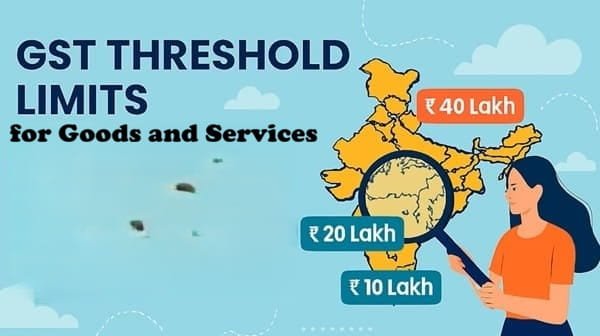
Understanding the GST threshold limit helps small businesses, freelancers, traders, manufacturers, and service providers determine when registration becomes mandatory. As of October 2026, the general threshold for suppliers of goods is ₹40 lakh in many states, while the threshold for services is generally ₹20 lakh. Lower limits apply in certain states.
What Is the GST Registration Threshold Limit?
The GST registration threshold is the annual aggregate turnover level beyond which a business generally becomes liable to register under GST, subject to applicable conditions and exceptions.
Section 22 of the Central Goods and Services Tax (CGST) Act establishes the general turnover-based registration requirement. The applicable limit differs according to whether the business supplies goods, services, or both.
The following table summarises the commonly applicable thresholds.
| Business category | General threshold | Lower-threshold states |
| Suppliers of goods | ₹40 lakh | ₹20 lakh |
| Suppliers of services | ₹20 lakh | ₹10 lakh |
These figures are general thresholds, not universal exemptions. Certain states have different eligibility conditions, and some businesses must register even below the applicable limit. Always confirm the rules relevant to your state and business activity.
GST Threshold Limit for Goods
Businesses engaged exclusively in supplying goods may qualify for the higher threshold of ₹40 lakh, provided they meet the applicable conditions and operate in a state where this limit is available.
For example, a small retailer in an eligible state with annual aggregate turnover of ₹32 lakh may generally remain below the registration threshold if no compulsory registration provision applies and the business satisfies the relevant conditions.
In certain states, the applicable threshold for goods is ₹20 lakh instead. Businesses should not assume that the ₹40 lakh limit applies everywhere.
The higher threshold also does not automatically apply to every business that sells physical products. The nature of supplies, state-specific rules, and other eligibility conditions must be considered before deciding whether registration is necessary.
GST Threshold Limit for Services
The general registration threshold for service providers is ₹20 lakh in many states. In specified states, a lower threshold of ₹10 lakh may apply.
This category includes businesses such as consultants, freelancers, marketing agencies, designers, and other service providers, depending on their activities and applicable GST treatment.
For example, a consultant operating in a state where the ₹20 lakh threshold applies may generally remain below the turnover-based registration limit with annual aggregate turnover of ₹15 lakh, provided no compulsory registration rule applies.
Service providers should also examine whether they make interstate supplies or supply services through an e-commerce platform. Specific exemptions and conditions may affect the registration requirement, so the answer cannot always be determined from turnover alone.
How Is Aggregate Turnover Calculated?
Aggregate turnover is not necessarily the same as the profit earned by a business. It is calculated on a PAN-wide basis across India and generally includes the value of taxable supplies, exempt supplies, exports, and interstate supplies of persons having the same PAN.
GST itself, and the value of inward supplies on which tax is payable under reverse charge, are excluded from aggregate turnover as provided by the applicable definition.
For example, suppose a business has the following annual figures:
- Taxable sales: ₹18 lakh
- Exempt supplies: ₹5 lakh
- Export supplies: ₹3 lakh
Its aggregate turnover would generally be ₹26 lakh, assuming these figures fall within the statutory definition and there are no other adjustments. The calculation is based on turnover, not net profit.
If the same PAN is used for business operations in multiple states, the relevant supplies must generally be considered together when assessing aggregate turnover.
When Is GST Registration Mandatory Below the Threshold?
Some categories of businesses may be required to register even if their turnover is below the normal limit. Section 24 of the CGST Act sets out compulsory registration categories, subject to applicable notifications and exemptions.
The circumstances can include certain interstate taxable supplies, persons liable to pay tax under reverse charge, specified agents, and other notified categories.
However, exceptions exist. For example, eligible small service providers may receive threshold relief for certain interstate supplies or e-commerce transactions. Certain small sellers using e-commerce operators may also qualify for registration relief if they meet the applicable conditions.
Businesses should therefore avoid relying on outdated advice that every interstate supplier or every online seller must register regardless of turnover. Check the current law and relevant notifications for the exact category.
What Happens When Turnover Crosses the Limit?
When a business becomes liable to register, it generally must apply within 30 days from the date it becomes liable. Casual taxable persons and non-resident taxable persons are subject to separate advance registration requirements.
The application is made electronically through the official GST portal at www.gst.gov.in.
After registration, the business must comply with the requirements applicable to its registration type, including issuing appropriate invoices, filing returns, paying tax where due, and maintaining records. Voluntary registration is also possible, but once registered, the business generally becomes subject to the applicable obligations of a registered taxpayer.
Conclusion
The GST threshold limit depends on the type of supply and the state in which the business operates. The general threshold is ₹40 lakh for eligible suppliers of goods in many states and ₹20 lakh for service providers, with lower limits applicable in certain states.
However, turnover is only one part of the registration decision. Aggregate turnover must be calculated correctly, and compulsory registration provisions, exemptions, and state-specific conditions must also be reviewed. Businesses approaching the threshold should monitor their turnover regularly and consult a qualified GST professional if their circumstances involve interstate supplies, e-commerce, or multiple business locations.
Frequently Asked Questions
Q. What is the GST registration limit for goods in India?
The general threshold is ₹40 lakh in many states, while a ₹20 lakh threshold applies in certain states, subject to eligibility conditions.
Q. What is the GST registration limit for services?
The general threshold is ₹20 lakh, with a lower limit of ₹10 lakh in certain states.
Q. Is GST registration mandatory below the threshold?
It can be. Certain categories must register under compulsory registration provisions, although specific exemptions may apply.
Q. Does aggregate turnover include exempt supplies?
Yes. Exempt supplies are generally included when calculating aggregate turnover under GST, subject to the statutory definition.
Q. When should a business apply after crossing the GST threshold?
A business generally must apply within 30 days from the date it becomes liable to register, subject to the applicable rules.
Q. Can a small business register voluntarily below the threshold?
Yes. Voluntary registration is permitted, but the business must then follow the GST compliance requirements applicable to registered taxpayers.
 Meghna Sharma