 By Meghna Sharma
 ADP is one of the most established and trusted names in payroll and human capital management, serving over a million businesses worldwide with cloud-based platforms that simplify some of the most complex parts of running a company — Yes, ADP can reasonably be called a product-based company, though it operates on a distinctive hybrid model that blends standardized software products with significant outsourced HR services.
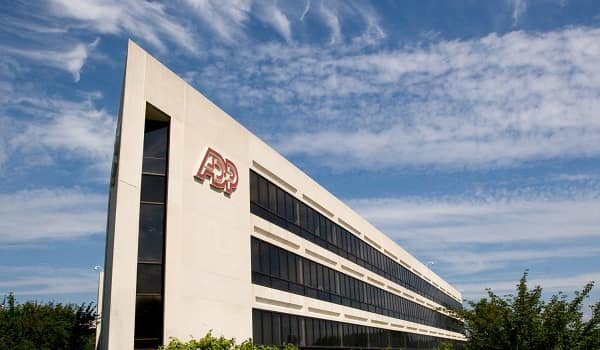
ADP Company Quick Overview
| Detail | Information |
| Full Legal Name | Automatic Data Processing, Inc. |
| Founded | 1949 |
| Founder | Henry Taub |
| Headquarters | Roseland, New Jersey, USA |
| Company Type | Public (NASDAQ: ADP) |
| Industry | Human Capital Management / Payroll Technology |
| Total Clients | 1.1 Million+ |
| Total Employees | 65,000+ |
| Countries of Operation | 140+ |
| CEO | Maria Black |
| Core Products | RUN Powered by ADP, Workforce Now, ADP Vantage HCM, ADP Assist |
| Main Segments | Employer Services, PEO Services |
| Key Competitors | Paychex, Gusto, Paycor, Workday, UKG |
Why ADP Leans Product-Based
ADP’s Employer Services segment, which generates the bulk of its revenue, is built around a portfolio of standardized cloud-based HCM products that businesses subscribe to and use repeatedly. This includes platforms like RUN Powered by ADP for small businesses, ADP Workforce Now for mid-sized companies, and ADP Vantage HCM for large enterprises. These are not customized service engagements built one client at a time — they are repeatable software products sold to hundreds of thousands of customers simultaneously.
This is a fundamentally different commercial model than a consulting firm or IT services company. When a small business signs up for RUN Powered by ADP, it is purchasing access to a standardized platform with predefined features — payroll processing, tax filing, time tracking, and benefits administration — the same product used by hundreds of thousands of other businesses.
A Genuine Software Product Portfolio
ADP has built out a real, branded product lineup over the decades, including ADP Marketplace for third-party app integrations, ADP Assist as an AI-powered automation assistant, and Roll by ADP designed specifically for microbusinesses. Each of these is marketed, priced, and sold as a distinct product with its own feature set, much like a SaaS company would structure its offerings.
The company has also positioned itself around continuous product innovation, winning industry recognition such as the Stevie Award for Product Innovation for RUN Powered by ADP in 2024. This product-development mindset, where ADP invests in improving and expanding specific named products, mirrors how genuine technology product companies operate.
The PEO Services Layer: A Service Component
Where ADP becomes more nuanced is its Professional Employer Organization business. Through PEO services, ADP acts as a co-employer for client businesses, taking on HR administration, compliance, and benefits responsibilities directly. This is a genuine outsourced service, not a self-service software product — clients hand over HR functions for ADP’s team to manage on their behalf.
This service layer means ADP isn’t a pure product company in the way Microsoft or Salesforce might be. A meaningful portion of its business involves human-delivered HR administration and compliance expertise rather than a self-service platform alone.
Revenue Model: Subscription and Per-Transaction Product Logic
ADP’s pricing structure reflects product company economics. Customers typically pay an annual base price along with per-transaction fees for payroll runs, a model far closer to software subscription pricing than to project-based consulting billing. This recurring, scalable revenue structure — where the same underlying platform serves enormous volumes of customers with minimal customization per client — is a hallmark of product-based business.
Why It’s Not a Pure Product Company Either
Despite its strong product orientation, ADP still differs from companies like Oracle or SAP in one key respect: a portion of its value proposition depends on human expertise around compliance, multi-jurisdiction tax law, and HR administration delivered alongside the software. Customers aren’t just buying a tool — they’re often buying ongoing compliance assurance and HR support bundled with it.
This blend places ADP in a hybrid category, but one that leans more product-based than service-based overall, since the core revenue driver remains its standardized, repeatable software platforms used by over a million clients rather than customized service delivery built individually for each customer.
What This Means for Job Seekers Evaluating ADP
For those exploring careers at ADP, it’s worth knowing the company offers both genuine product engineering roles — building and improving its HCM platforms — as well as substantial service-oriented roles in HR consulting, compliance, and client support through its PEO business, making it a relatively balanced option for people interested in either career path.
The simple answer is: ADP is a product-based company at its core, built around scalable HCM software platforms, with a meaningful outsourced HR services layer that adds a service dimension to its overall business.